Comedy & Viral · SOURCE-CHECKED
How Instagram Influencers Make Money in India
From brand deals and affiliate links to Subscriptions, Gifts and Reels ads, here’s how Indian Instagram creators actually make money—and the rules they must follow.
If your Instagram feed in India looks like a stream of witty Reels, product unboxings and meme-laced brand collabs, that’s not an accident—it’s a maturing industry with real money changing hands. For creators, Instagram has become a viable income stack; for marketers, it’s a performance channel that now sits next to search and e‑commerce in media plans. And as tools inside Instagram formalise the handshake between brands and creators, more of that business is happening on‑platform, not in DMs. ([financialexpress.com](financialexpress.com/business/brandwagon-jj-communications-manish-jain-highlights-how-influencers-are-reshaping-indias-tech-marketing-3859060/?utm_source=openai))
This guide breaks down exactly how Indian Instagram influencers earn in 2026, what’s growing fastest, the rules you must follow, and where the next rupee is likely to come from.
The money map: every major Instagram revenue stream
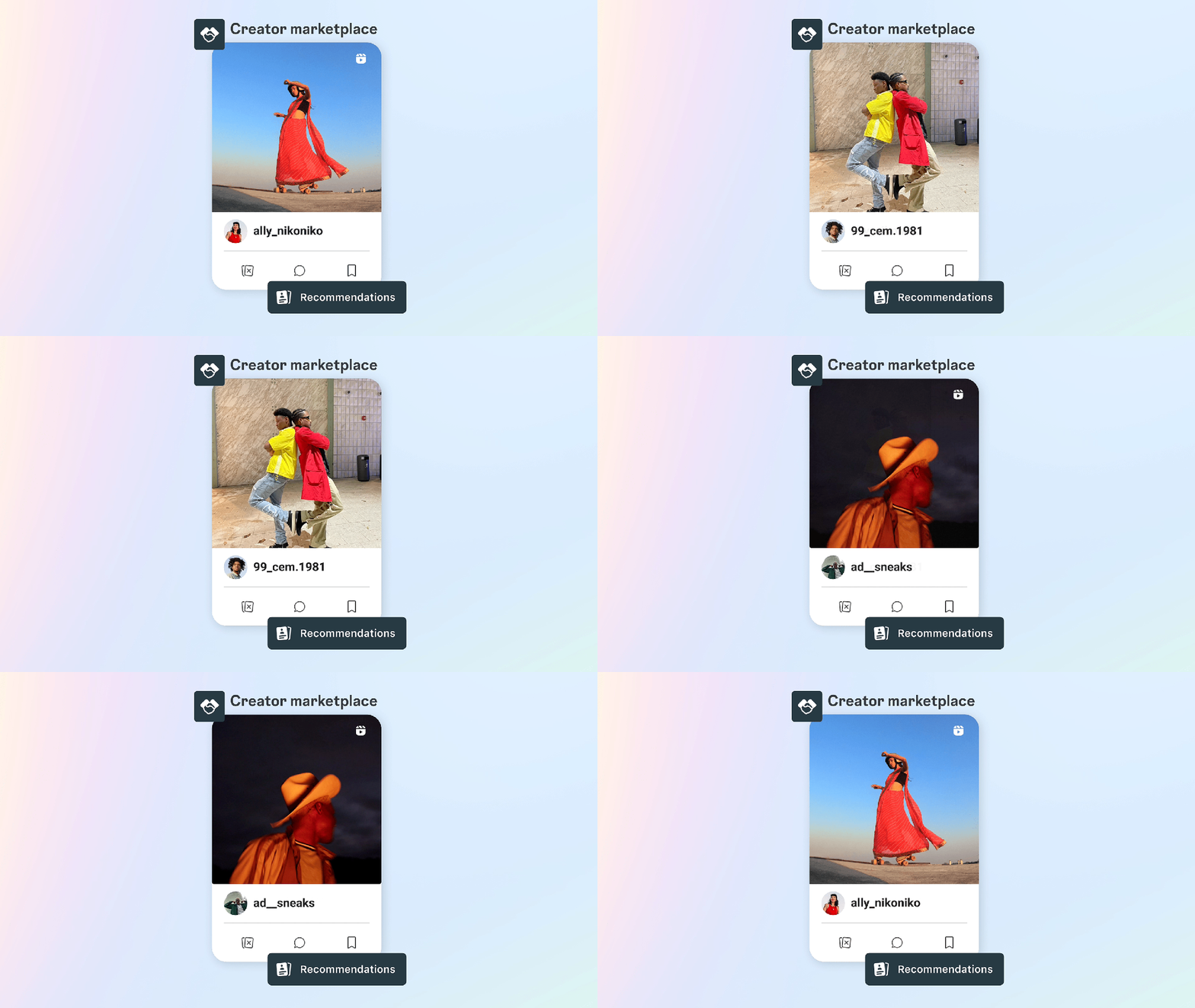
- Brand collaborations via the Creator Marketplace: Meta now invites brands and creators in India to collaborate inside Instagram’s Creator Marketplace, with discovery, briefs and payments tied into Meta Business Suite. For creators, this centralises outreach; for brands, it improves vetting, briefs and approvals. ([about.fb.com](about.fb.com/news/2024/02/creator-marketplace-for-brands-and-creators-to-collaborate-on-instagram/?utm_source=openai))
- Partnership ads and whitelisting: When a creator posts branded content, advertisers can turn that post into a paid ad and run it across placements. This “partnership ads” flow (earlier called branded content ads) is available to Instagram professional accounts that meet eligibility rules and makes creator content work like performance media. ([facebook.com](facebook.com/help/instagram/1372533836927082?utm_source=openai))
- Ads on Reels payouts: Meta has shifted to a performance‑based payout model for Reels ads and expanded eligibility beyond initial tests; India is among the markets where creators have been invited into these programs via Meta’s updates. While earnings vary widely by view quality and inventory, this is now a meaningful line item for Reels‑first creators. ([about.fb.com](about.fb.com/news/2023/05/expanding-ads-on-reels/?utm_source=openai))
- Subscriptions for exclusive content: Eligible Instagram creators in India can charge a monthly fee for subscriber‑only posts, Reels, Lives and chat. Indian tech media reported local pricing bands (for example, ₹85–₹890 per month), and Instagram’s Help Center outlines setup and eligibility. Note that Meta had waived its subscription fees through the end of 2024; from 2025 onward, terms may differ. ([gizbot.com](gizbot.com/how-to/how-to-add-a-subscription-button-on-instagram-and-monetize-your-account-094535.html?utm_source=openai))
- Gifts on Reels: Instagram’s virtual tipping feature—Gifts—rolled out in India in 2023, letting fans send creators “stars” that convert to money. It’s not a replacement for brand deals, but it can smooth out monthly volatility, especially for entertainment and comedy accounts that go viral. ([about.fb.com](about.fb.com/news/2023/05/introducing-new-features-to-make-the-most-of-your-instagram-experience/?utm_source=openai))
- Affiliate marketing and social commerce: The most common route here is Amazon Associates India, which pays category‑based fees for qualifying purchases driven via a creator’s links (often placed in bio, Stories or DMs). Fashion and beauty creators also use retail affiliate networks for marketplaces like Myntra or AJIO (typically via third‑party networks), but program terms vary. If you want clear, documented rates and rules, Amazon’s public fee schedule is the reference point. ([affiliate-program.amazon.in](affiliate-program.amazon.in/welcome?utm_source=openai))
- Off‑platform income anchored by Instagram: Long‑term ambassadorships, speaking gigs, workshops, merch and paid communities often start with Instagram reach but monetise elsewhere. The point: Instagram is both a cash register and a marketing engine that powers higher‑value products.
How big is the pie—and who’s paying?
India’s influencer marketing spend has accelerated. A 2025 Financial Express report citing GroupM INCA pegs the market at ₹2,344 crore in 2023, with growth expected to cross ₹3,000 crore by 2025. EY’s 2024 assessment projects ₹3,375 crore by 2026, reflecting how creator content has become a fixture in brand strategy. ([financialexpress.com](financialexpress.com/business/brandwagon-jj-communications-manish-jain-highlights-how-influencers-are-reshaping-indias-tech-marketing-3859060/?utm_source=openai))
What’s actually getting funded? Three buckets dominate: (1) product‑led launches in fashion/beauty and consumer tech, (2) SME performance campaigns using micro‑influencers with partnership ads, and (3) tent‑pole entertainment and OTT launches seeking mass reach via Reels. Marketplace tools inside Instagram make these buys easier for both sides. ([about.fb.com](about.fb.com/news/2024/02/creator-marketplace-for-brands-and-creators-to-collaborate-on-instagram/?utm_source=openai))
How creators price—beyond follower counts
Rates are less about follower totals and more about provable outcomes and rights. Expect brands to ask for:
- Reels first: It’s the default asset, with Stories for reminders and one static post for longevity.
- Usage rights and whitelisting: Many deals now include brand usage on organic handles and paid amplification via partnership ads; that adds a licensing premium. ([facebook.com](facebook.com/help/instagram/1372533836927082?utm_source=openai))
- Multi‑platform delivery: Cross‑posting to Facebook (and sometimes YouTube Shorts) is often bundled, especially for entertainment or streaming campaigns. ([about.fb.com](about.fb.com/news/2023/06/helping-creators-get-discovered-and-earn-money-on-facebook/?utm_source=openai))
The creator’s counter should include: content exclusivity windows in the category, the number of edit rounds, timeline penalties, deliverables for re‑shoots, and whether the brief includes creator‑led concepting or just talent‑for‑camera.
The compliance fine print: disclosures, taxes, GST
- Ad disclosures are mandatory: ASCI’s Influencer Advertising Guidelines require clear, upfront labels like “#ad”, “#collab” or the platform’s Paid Partnership tag. The guidelines also specify placement and language (English or the content’s language) so disclosures aren’t buried. ASCI’s 2024–25 reporting flagged widespread non‑compliance among top digital stars, so brands are tightening checks. ([ascionline.in](ascionline.in/influencer-resource/?utm_source=openai))
- Consumer law penalties are real: The Central Consumer Protection Authority’s endorsement rules (20 January 2023) empower regulators to levy penalties up to ₹50 lakh and even prohibit endorsers who mislead. This applies to social media influencers and publishers, not just traditional celebrities. ([consumeraffairs.nic.in](consumeraffairs.nic.in/pressrelease/centre-releases-endorsement-guidelines-celebs-and-social-media-influencers-20-jan-2023?utm_source=openai))
- TDS on freebies and in‑kind payments: Under section 194R of the Income‑tax Act (effective 1 July 2022), brands must deduct 10% TDS on benefits or perquisites given to creators when the aggregate value exceeds ₹20,000 in a financial year. CBDT’s circular clarifies a common scenario: if a product sent for review is returned to the brand after use, no TDS applies; if the influencer keeps it, TDS kicks in. ([wmstatic-prd.incometaxindia.gov.in](wmstatic-prd.incometaxindia.gov.in/documents/20117/6507196/circular-no-12-2022.pdf/1ecab0f7-4d54-2d8a-4ac7-b788a61efc2b?t=1762868667701))
- GST obligations: Influencers providing services are typically liable to register once aggregate turnover crosses ₹20 lakh (₹10 lakh in specified states). Industry experts note that payouts from overseas platforms may qualify as export of services subject to conditions (for example, LUT without payment of tax), whereas domestic brand deals are taxed at 18% GST. Consult a tax advisor for specifics on place‑of‑supply and invoicing. ([legal.economictimes.indiatimes.com](legal.economictimes.indiatimes.com/amp/news/law-policy/income-from-ad-revenue-sharing-by-x-liable-to-gst-if-it-exceeds-threshold-experts/102703519?utm_source=openai))
Why it’s growing: better pipes between content and commerce
Meta keeps pushing India‑specific creator infrastructure—from education initiatives to verified business subscriptions—because the country drives massive Reels consumption and advertiser demand. The Creator Marketplace reduces discovery friction. Partnership ads make creator content targetable. And Gifts/Subscriptions add a community‑funded layer that’s less cyclical than campaign work. Together, these pipes turn a viral moment into measurable performance. ([about.fb.com](about.fb.com/news/2024/02/creator-marketplace-for-brands-and-creators-to-collaborate-on-instagram/?utm_source=openai))
The snags: volatility, policy shifts and trust gaps
Creator earnings can swing with algorithm changes and auction demand; Meta’s move to a performance‑based Reels payout model has changed the calculus on what views are worth. Expect variability month to month, especially if a large share of income is ad‑revenue‑linked rather than deal‑based. ([about.fb.com](about.fb.com/news/2023/05/expanding-ads-on-reels/?utm_source=openai))
Compliance is the other tripwire. ASCI has repeatedly found material‑connection disclosures missing or unclear among marquee names. For creators, sloppy labels risk takedowns and lost trust; for brands, they risk complaints and regulator attention. Build disclosure, substantiation and claims review into your workflow from day one. ([ascionline.in](ascionline.in/wp-content/uploads/2025/02/Press-Release-Influencer-Disclosure-Guidelines-ASCI-Report.pdf?utm_source=openai))
What happens next
- Marketplace‑first deals: More SMEs will brief creators directly inside Instagram’s marketplace rather than via cold emails, compressing the pitch‑to‑PO cycle. ([about.fb.com](about.fb.com/news/2024/02/creator-marketplace-for-brands-and-creators-to-collaborate-on-instagram/?utm_source=openai))
- Reels as performance media: Partnership ads will keep turning creator posts into targeted, shoppable placements—especially for fashion, beauty and D2C. ([facebook.com](facebook.com/help/instagram/1372533836927082?utm_source=openai))
- Bigger pie overall: Independent analyses expect India’s influencer economy to keep compounding, propelled by short‑form video and commerce integration. For planning horizons, third‑party strategy research points to multi‑billion‑dollar potential by FY29, even as global platforms dominate distribution. ([economictimes.indiatimes.com](economictimes.indiatimes.com/tech/technology/indian-short-form-video-platforms-generate-100-million-in-ad-spends-in-fy24-redseer-report/articleshow/115482563.cms?utm_source=openai))
The Ledger view
Instagram in India is now a business stack, not just a stage. The creators who thrive treat it like one: diversify income (brand, affiliate, payouts, subs), insist on rights and measurement in contracts, and hard‑bake compliance. If you’re a marketer, budget for creative fees, rights, and partnership ads—not just one‑off Reels. Either way, the money follows clarity: clear briefs, clear disclosures and clear value.